Home / MIRCat Exchange / David Rachor
Resources shared by...
Dr. David Rachor
Professor, Performer, Organologist
Edited by Dr. James B. Kopp
(Archiving in progress; __ digital files as of __)
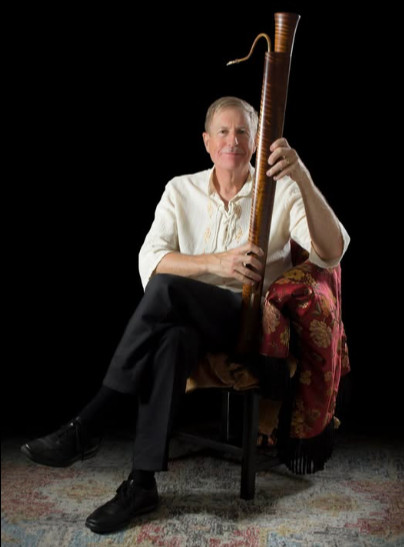
David J. Rachor
About...
Dr. DAVID RACHOR (1950-2025) was Emeritus Professor of Bassoon at the School of Music, University of Northern Iowa, Cedar Falls, Iowa, USA. An internationally known performer and professor of bassoon, Dr. Rachor contributed significantly to scholarship about the instrument in conference presentations and publications.
In announcing his death on Facebook, his wife wrote, "In the words of many, he was one of the most generous, adventurous, and knowledgeable musicians they have known. He was a brother, husband, father, grandfather, uncle, friend, professor, mentor, scholar, researcher, bassoonist, and period instrument specialist, among all his many talents. "Free Spirit" never had a more perfect representative on this earth."
With ongoing editorial oversight by Dr. James Kopp, the MIRCat Library extends Dr. Rachor's legacy by continuing his online publication of bassoon organology.
Full Biography
This site provides structural data on 317 original historical bassoons from c.1700 to c.1860 of 132 makers; and 24 modern copies [Revised 5 March 2025]. This includes the following: number of keys, segment lengths, dimensions and position of tone holes, bore profile, and photos of the instruments, including the maker’s stamp. Historical bassoons are from France, Germany, Belgium, Russia, Italy, England, and the United States by important makers such as Denner, Eichentopf, Prudent, Grenser, Poerschmann, and Savary, to name a few. The bassoons are found in private and musical instrument museum collections in Europe and the USA [See “Website Collection Locations 15 Feb, 2025”].
I have posted the data for all the 341 individual bassoons in the database and a separate page for each maker. It was necessary to make a page for each of the 132 historical bassoon makers in order to have Google, Bing, and other search engines better index the site. Refer to the “List of Historical Bassoons in the Hichwa-Rachor Database” to see the entire list of bassoons. Even though all the bassoons currently in the database are posted, the work on the website is not by any means finished.
In the near future, I will begin posting a section on the website describing the methods used to obtain the bassoon measurements. This new section will include photos and instructions, enabling other bassoon researchers to duplicate the measurements.
As of February 2025, I have begun to post comparison bassoon data Excel sheets on several makers. These will be posted on the bassoon maker pages and as a separate menu item. For example, the data of the five known Scherer bassoons on one Excel sheet has been posted. These comparison data Excel sheets will enable researchers to quickly compare the similarities and differences of these Scherer bassoons.
Regarding the detailed bibliography of sources used to obtain information on the bassoons on the website, in the past, this list was presented on each General Information sheet for each bassoon. This method was found to be time-consuming since it required much moving of documents within WordPress. As of 1 February, the most complete list of Bibliographical sources that refer to the maker and his bassoons are found on the maker’s pages.
I recently posted a version of my “User Guide to the Database of Historical Bassoons.” This document explains how to use the general information and data spreadsheets. Terms such as “Two-piece saddle on F key flap and touch” or “Bell Flare” are discussed. It is necessary to read the entire guide to know precisely what data is presented.
Remember that in the bassoon titles, an “O” signifies an original bassoon, and a “C” indicates a modern copy of a historical bassoon. In addition, the number following directly after the maker’s name refers to the order in which a particular bassoon of the same maker was entered into the database. For example, “Porthaux8-O-BrusMIM3118” means this bassoon was the eighth bassoon by the maker Dominique Porthaux entered into the database.
Take a look at the “Photo Gallery of Instrument Makers, Researchers, Players, and Instruments” and the “Photo Gallery Dedicated to William Waterhouse.” All these photos are from my personal photo collection and cannot be seen anywhere else.
Regarding the photos of the bassoons; they are not by any means of professional quality. They were taken in all conditions, including poor lighting, and in all cases quickly. One is always under time constraints when conducting research at a museum or a private collection. There is much to be done, and taking photos is only one item that needs to be accomplished.
Click link for list of bassoons: List, distinct basns v48, 7 March 2025
As of 7 March 2025, the database contained 341 distinct bassoons: 317 original bassoons and 24 copies of historical bassoons made by 132 makers. Bassoons with two or three wing joints, or two bells, are considered one bassoon.
There are 26 bassoons listed as Short Format; these are bassoons in which the data input form is incomplete. The bassoons using the Short Format data input form may not be complete for various reasons, such as the bore profile could not be measured entirely because of a blockage in the bore, specific keys could not be removed, or there was not enough time to complete the measurements.
Buhner & Keller Comparison, Bassoon Data Spreadsheets v2
DennerJC Comparison, Bassoon Data Spreadsheets v2
Eichentopf Comparison, Bassoon Data Spreadsheets
GrenserA Comparison, Bassoon Data Spreadsheets
GrenserH Comparison, Bassoon Data Spreadsheets
HeckelJA Comparison, Bassoon Data Spreadsheets v2
Porthaux Comparison, Bassoon Data Spreadsheets
Prudent Comparison, Bassoon Data Spreadsheets v2
Rottenburgh Comparison, Bassoon Data Spreadsheets v2
Savarypère Comparison, Bassoon Data Spreadsheets v2
Savaryjeune Comparison, Bassoon Data Spreadsheets
SaxCJ Comparison, Bassoon Data Spreadsheets v3
Scherer Comparison, Bassoon Data Spreadsheets v3
Nullam id dolor id nibh ultricies vehicula ut id elit. Cras justo odio, dapibus ac facilisis in, egestas eget quam. Donec id elit non mi porta gravida at eget metus.
Nullam id dolor id nibh ultricies vehicula ut id elit. Cras justo odio, dapibus ac facilisis in, egestas eget quam. Donec id elit non mi porta gravida at eget metus.
Nullam id dolor id nibh ultricies vehicula ut id elit. Cras justo odio, dapibus ac facilisis in, egestas eget quam. Donec id elit non mi porta gravida at eget metus.
Nullam id dolor id nibh ultricies vehicula ut id elit. Cras justo odio, dapibus ac facilisis in, egestas eget quam. Donec id elit non mi porta gravida at eget metus.
Nullam id dolor id nibh ultricies vehicula ut id elit. Cras justo odio, dapibus ac facilisis in, egestas eget quam. Donec id elit non mi porta gravida at eget metus.
Makers: Historical Bassoons categorized by Maker
Click to see User Guide to Database of Historical Bassoons
The Hichwa-Rachor database contains seven original bassoons of Frédéric Guillaume Adler (d.1854) . He flourished in Paris from c.1808 to his death in 1854. He was a very important Parisian woodwind maker in the first half of the 19th Century. According to Constant and Fétis, he improved the bassoon by adding keys and other improvements, such as rounded tone hole surfaces. In 1845, Adler was involved in a dispute with Adolphe Sax. AdlerFG5 is interesting in that the wing and long joint are reversed.
Literature
Focht, Josef (ed.). musiXplora.
Haine, Malou. Les facteurs d’instruments de musique à Paris au 19e siècle. Université de Bruxelles, 1984.
Hofer, Achim, et al. Lexikon der Holzblasinstrumente. Laaber, 2018.
Jansen, Will. The Bassoon: Its History, Construction, Makers, Players and Music, Vol. 1, 327. Buren: Frits Knuf, 1978.
Langeveld, Erik. Tentoonstelling van fagotten, prenten, boeken, en manuscripten uit de collectie van Henk de Wit, 31. Amsterdam: De Ijsbreker, 1992.
Pierre, Constant. Les Facteurs d’Instruments de Musique: Les Luthiers et la Facture Instrumentale, 300, 301. Paris: Ed. Sagot, 1893,
Tiffou, Augustin. Le basson en France au XIXe siècle: Facture, théorie et répertoire, 48, 102, 103. L’Harmattan, 2010.
Waterhouse, William. The New Langwill Index. London: Tony Bingham, 1993.
8 key bassoon; AdlerFG1-O-BrusMIMIDK0018
14 key bassoon; AdlerFG2-O-Koster
10 key bassoon; AdlerFG3-O-Reil
13 key bassoon; AdlerFG4-O-Kampmann812
13 key bassoon; AdlerFG5-O-Peebles
10 key bassoon; AdlerFG6-O-Rapoport
13 key bassoon; AdlerFG7-O-Vleeshuis2000.001.076
The Hichwa-Rachor database contains four original Astor bassoons. One bassoon (Astor1-O-vanRijn) is attributed to George Astor, and two by Astor & Company. The workshop flourished in London c.1778-c.1831
Literature
Jansen, Will. The Bassoon: Its History, Construction, Makers, Players and Music, Vol. 1, 332. Frits Knuf, 1978.
Langeveld, Erik. Tentoonstelling van fagotten, prenten, boeken, en manuscripten uit de collectie van Henk de Wit, 17. Amsterdam: De Ijsbreker, 1992.
Lasocki, David. “New Light on Eighteenth-Century English Woodwind Makers from Newspaper Advertisements.” The Galpin Society Journal 63 (May 2010): 112–24.
Myers, Arnold. Historic Musical Instruments in the Edinburgh University Collection, Vol. 2, Part E, Fascicle ii: Bassoons.
Rice, Albert. Four Centuries of Musical Instruments: The Marlowe A. Sigal Collection, 213. Atglen, PA: Schiffer, 2015.
Waterhouse, William. The New Langwill Index. London: Tony Bingham, 1993.
Young, Phillip. 4900 Historical Woodwind Instruments. London: Tony Bingham, 1993.
Young, Phillip. Loan Exhibition of Historic Double Reed Instruments, 68. August 1988.
1 - 6 key bassoon
- General Information
- Data Spreadsheet
- Photos
Nullam id dolor id nibh ultricies vehicula ut id elit. Cras justo odio, dapibus ac facilisis in, egestas eget quam. Donec id elit non mi porta gravida at eget metus.
Historical Bassoons by Maker
-
- subitem1
- subitem2
-
- subitem1
- subitem2
-
- subitem1
- subitem2
-
- subitem1
- subitem2
-
- subitem1
- subitem2
-
- subitem1
- subitem2
-
- subitem1
- subitem2
-
- subitem1
- subitem2
-
- subitem1
- subitem2
-
- subitem1
- subitem2